Media Effects
Effects of Infant Media Usage
The effects of infant media usage: what do we know and what should we learn?" examines the impact of television viewing on infants' development, focusing on language acquisition, cognitive growth, and attention.
Acta Paediatrica · 2008-12-09
Summary
Understanding the effects of early media exposure is crucial, as over 90% of children begin watching TV regularly before the age of 2, despite recommendations to the contrary.
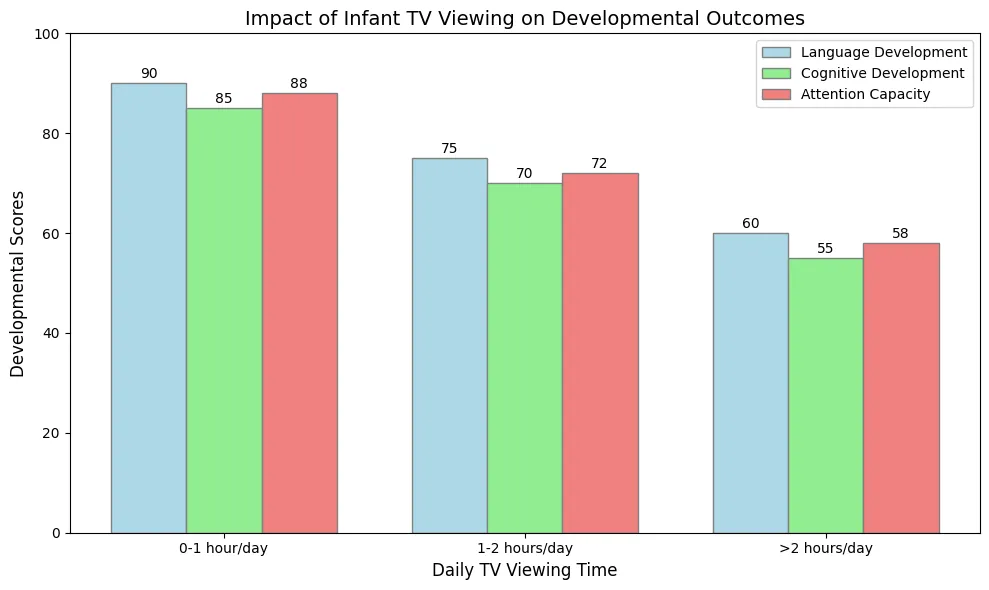
Key Findings
Language Development:
Infant TV viewing has been associated with delayed language development.
Cognitive Development:
No studies to date have demonstrated benefits associated with early infant TV viewing.
Attention Capacity:
The preponderance of existing evidence suggests the potential for harm in terms of attentional capacity.
X-Axis:
Daily TV viewing time categories: '0-1 hour/day', '1-2 hours/day', '>2 hours/day'.
Y-Axis:
Developmental scores (hypothetical scale from 0 to 100).
Bars:
Three sets of bars representing language development, cognitive development, and attention capacity scores for each TV viewing category.
Methodology:
This article reviews existing studies on the effects of infant TV viewing across multiple domains of child development, including language, cognition, and attentional capacity.
Implications:
The findings suggest that early exposure to television may have detrimental effects on infants' language development, cognitive growth, and attention. Parents should exercise caution in exposing infants to excessive media and consider limiting screen time during early developmental stages.

Built on the same research you're reading.
KidSafeTV — No addictive algorithms, no brainrot. Just approved content that ends calmly.