Media Effects
Early Childhood Television Exposure
Prospective Associations Between Early Childhood Television Exposure and Academic, Psychosocial, and Physical Well-being by Middle Childhood" investigates the impact of television exposure during early childhood on various aspects of well-being in middle childhood.
Jama Pediatrics · 2010-05-03
Summary
Understanding the long-term effects of early television exposure is crucial, as it can influence academic performance, psychosocial development, and physical health during middle childhood.
Key Findings
Academic Outcomes:
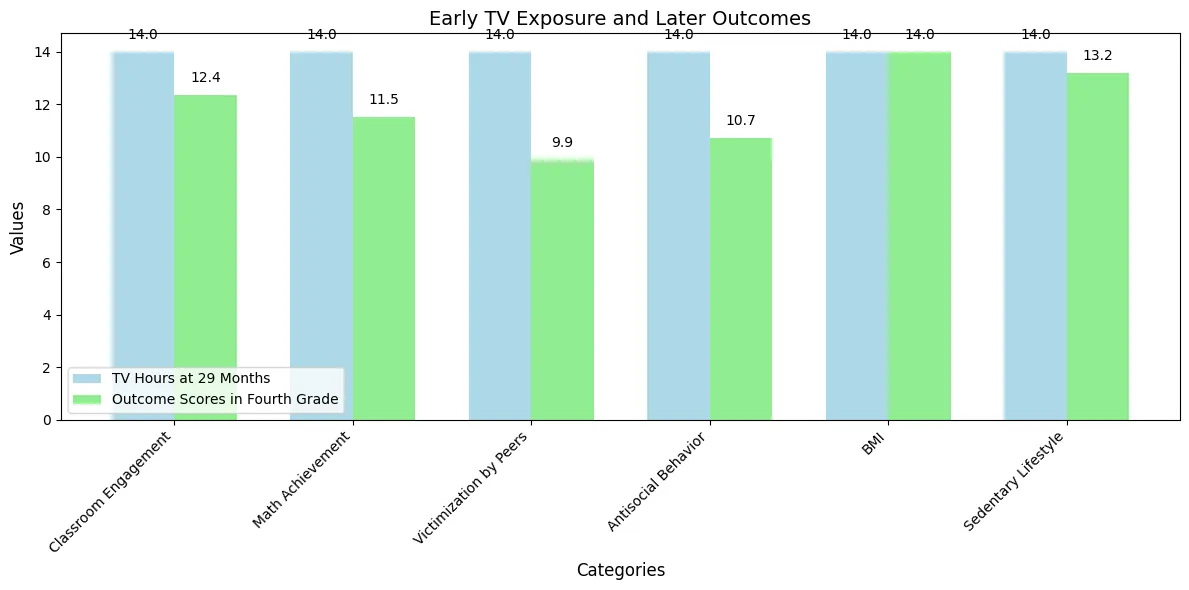
Increased television exposure at 29 months was associated with decreased classroom engagement and math achievement in fourth grade.
Psychosocial Outcomes:
Higher early television exposure correlated with a higher likelihood of being victimized by classmates and exhibiting antisocial behaviors.
Physical Well-being:
Early television exposure was linked to higher body mass index (BMI) and a more sedentary lifestyle in middle childhood.
X-Axis:
Categories representing different outcomes.
Y-Axis:
Values corresponding to TV hours and normalized outcome scores.
Bars:
Two bars per category representing TV hours at 29 months and outcome scores in fourth grade.
Population:
1,314 children from the Quebec Longitudinal Study of Child Development.
Methodology:
Parent-reported data on weekly hours of television exposure at 29 and 53 months of age.
Assessments of academic, psychosocial, and physical well-being in fourth grade.
Implications:
The findings suggest that excessive television exposure in early childhood may have detrimental effects on various aspects of well-being by middle childhood. Limiting screen time during early developmental stages could be beneficial for long-term academic, social, and physical health.

Built on the same research you're reading.
KidSafeTV — No addictive algorithms, no brainrot. Just approved content that ends calmly.