Cognitive Development
Autism Symptoms Associated With Screen Exposure
Changes in autism symptoms associated with screen exposure: Case report of two young children
Science Direct · 2022-09-24
Summary
This case report explores the relationship between screen exposure and autism symptoms in two young children, highlighting how screen reduction and increased social interaction impact developmental outcomes.
Key Findings
Positive Impact of Screen Reduction:
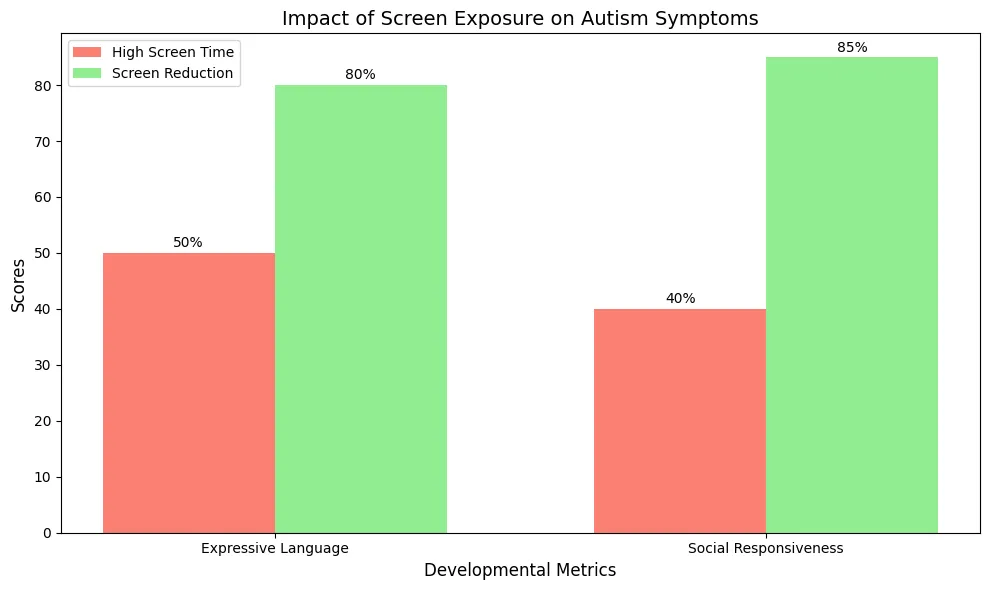
Both children exhibited marked improvements in social and language development when screen time was replaced with socially oriented activities.
Negative Effects of Increased Screen Time:
Increases in screen exposure correlated with regression in developmental milestones, including social responsiveness and language abilities.
Fluctuations in Symptoms:
Repetitive and restrictive behaviors intensified with higher screen time and diminished with screen reduction.
The graph illustrates the progression of expressive language and social responsiveness scores during periods of high screen time versus screen reduction.
Participants: Two children diagnosed with Autism Spectrum Disorder (ASD).
Methodology: The children underwent periods of screen time reduction, replaced with parent-led social interactions, followed by periods of increased screen exposure.
Observations: Behavioral and developmental changes were documented through direct observation, parental reporting, and standard developmental assessments.
Implications:
Replacing screen time with social interaction and family engagement can lead to significant improvements in autism-related symptoms. This suggests that high screen exposure may hinder developmental progress in children with ASD. Parents and interventionists are encouraged to adopt screen time reduction strategies.

Built on the same research you're reading.
KidSafeTV — No addictive algorithms, no brainrot. Just approved content that ends calmly.