Social Development
Digital Media in Social Skill Development
Digital Media and Language Development: The Role of Child-Directed Speech
Springer Nature Link · 2024-11-19
Summary
Social interactions during childhood and adolescence are vital for developing empathy, communication skills, and emotional intelligence. With digital media often replacing face-to-face interactions, the implications for social skills are significant.
Key Findings
Reduced Face-to-Face Interactions: Children who spent more than 3 hours daily on digital devices reported fewer opportunities for face-to-face socialization with peers.
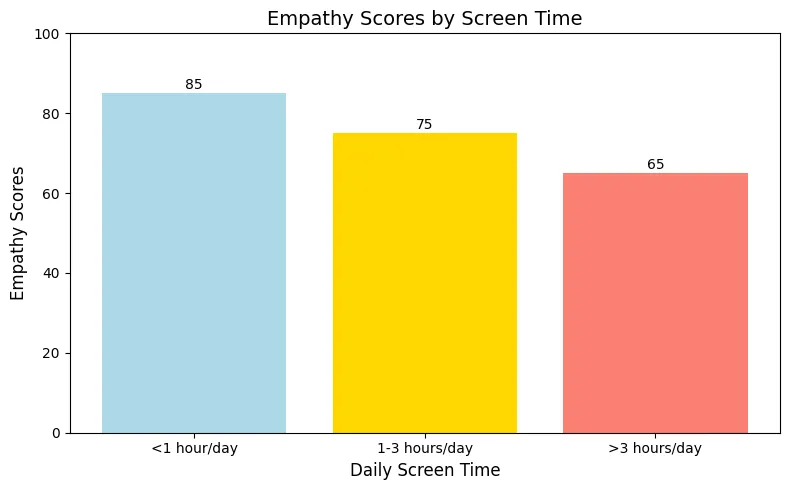
Lower Empathy Levels: High digital media users scored lower on empathy tests compared to children who spent less time on screens.
Positive Role of Collaborative Games: Online games that required collaboration improved teamwork and communication skills in moderate users.
X-Axis:
Represents Daily Screen Time (<1 hour/day, 1-3 hours/day, >3 hours/day).
This axis categorizes children based on their daily exposure to screens.
Y-Axis:
Represents Empathy Scores.
This axis shows the measured levels of empathy in children.
Population: 500 children aged 8-14.
Methodology: Participants completed empathy and social skill assessments. Parents reported daily screen time and types of media consumed.
Implications: Encouraging balanced media use and promoting social media activities that foster collaboration and communication can help mitigate negative effects on social skill development.

Built on the same research you're reading.
KidSafeTV — No addictive algorithms, no brainrot. Just approved content that ends calmly.